
Introduction
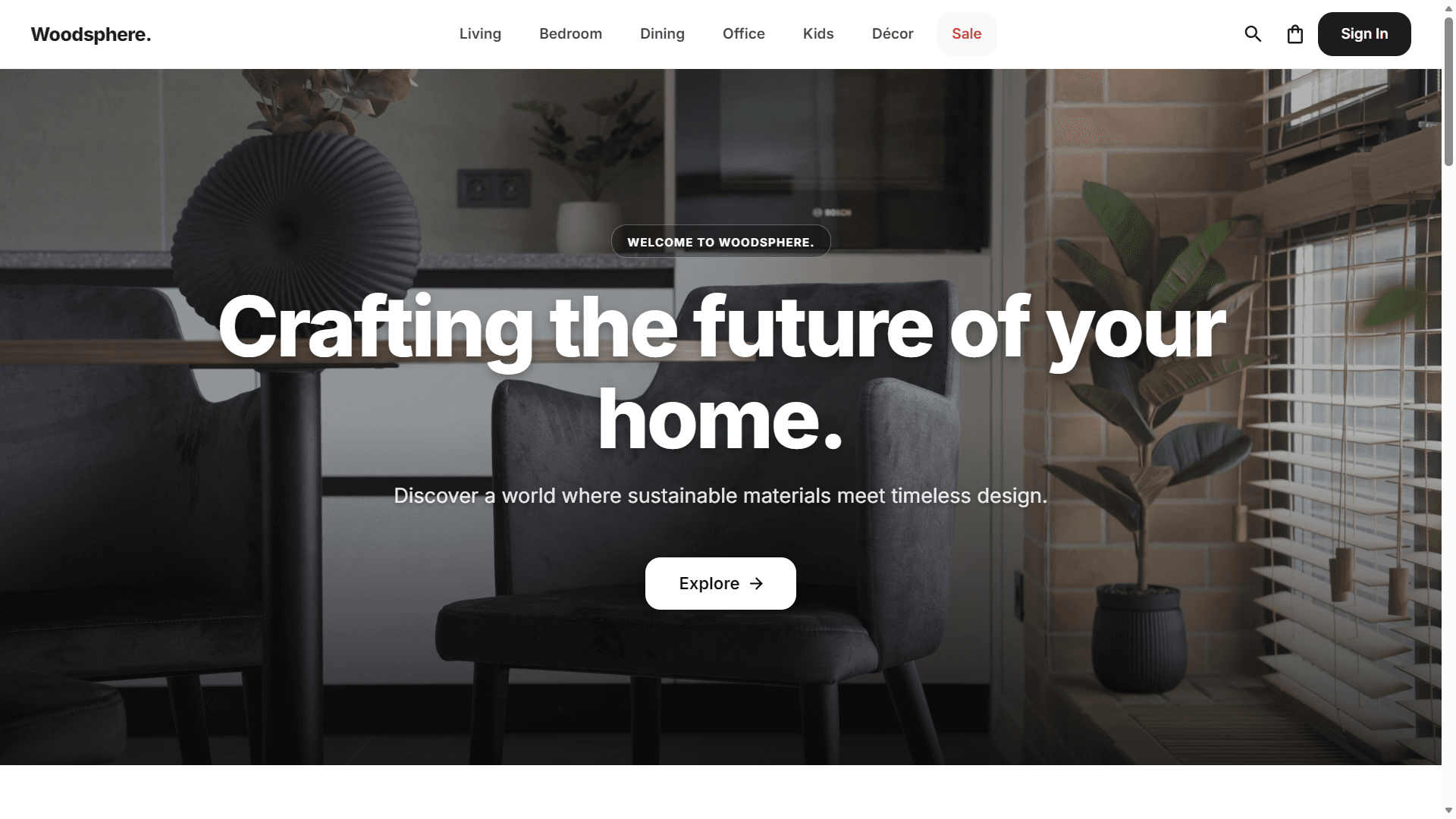
Most e-commerce projects stop at basic functionality — product listings, cart, and checkout. But real-world systems require more than that. They need to be scalable, maintainable, and performant under real usage.
Woodsphere was built with that mindset. The goal was not just to create an online furniture store, but to design a system that reflects real-world engineering decisions.
Problem Statement
Traditional e-commerce implementations often suffer from:
- Poor performance with growing product data
- Unstructured backend logic
- Inconsistent UI across devices
- Lack of scalability
Woodsphere was designed to address these issues with a clean, modern tech stack and structured architecture.
Tech Stack
- Next.js → Server-side rendering and optimized routing
- Material UI → Consistent and responsive UI components
- Prisma → Type-safe ORM for efficient database management
- Node.js → Backend logic and API handling
System Architecture
The application follows a modular full-stack architecture:
Frontend Layer
Built with Next.js and Material UI, focusing on:
- Component reusability
- Responsive design
- Fast rendering using SSR
Backend Layer
Handled through Next.js API routes:
- Business logic separation
- Efficient request handling
- Clean API structure
Database Layer
Managed with Prisma:
- Structured schema design
- Optimized queries
- Type safety
This separation ensures maintainability and scalability.
Key Features
- Dynamic product listings with structured data
- Optimized data fetching for performance
- Responsive UI across devices
- Clean and maintainable codebase
- Scalable architecture for future expansion
Challenges Faced
1. Handling Growing Product Data
As product data increases, performance can degrade.
Solution:
Optimized queries using Prisma and implemented efficient data fetching strategies.
2. Maintaining UI Consistency
Different screen sizes can break layouts.
Solution:
Used Material UI’s responsive system and component-based design.
3. Performance Optimization
Slow load times affect user experience.
Solution:
Leveraged Next.js server-side rendering and optimized component structure.
What I Learned
- Building scalable systems requires clear separation of concerns
- Performance should be considered from the start, not later
- Clean architecture simplifies future feature additions
- Real-world projects demand more than just working code
Future Improvements
- Authentication and user accounts
- Shopping cart and checkout system
- Payment gateway integration
- Admin dashboard for product management
Conclusion
Woodsphere is more than just an e-commerce project. It represents an approach to building systems that are scalable, maintainable, and aligned with real-world requirements.
The focus was not just on making it work, but on making it work well — under realistic conditions.